Introduction
The materials you select are the backbone of every weaving project. From the type of yarn to the texture of the fibers, every choice influences the final piece’s appearance, feel, and durability. Understanding the range of materials available empowers learners to make informed decisions and create textiles that reflect both quality and personal style.
Understanding Fibers
Fibers fall into two main categories: natural and synthetic. Natural fibers, such as cotton, wool, silk, and linen, provide warmth, texture, and breathability. They often have a timeless appeal and respond well to dyeing. Synthetic fibers, like acrylic or nylon, offer durability, flexibility, and vibrant colors, making them suitable for modern designs and experimental projects.
Key Considerations:
- Durability and lifespan of the fiber
- How fibers react to washing and handling
- Texture and comfort for wearable textiles
Choosing the right fiber ensures that the finished product meets both aesthetic and functional goals.
Yarn Types and Thickness
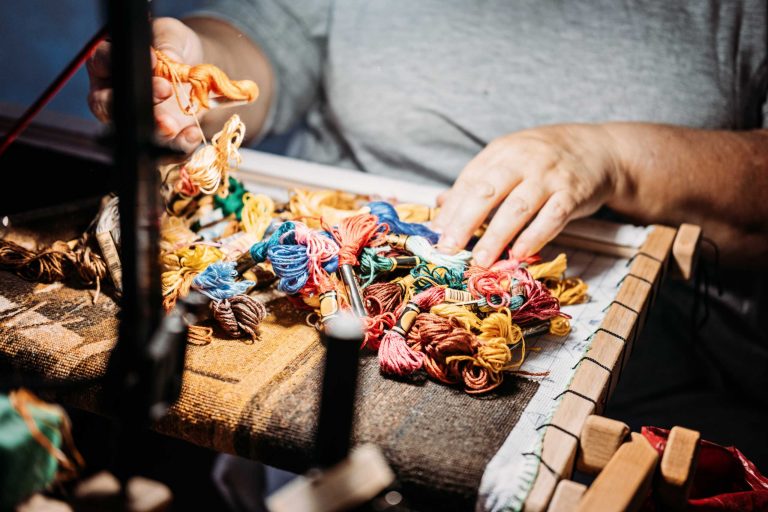
Yarn thickness, twist, and ply significantly affect weaving results. Thin yarns create delicate patterns, suitable for lightweight textiles, while thicker yarns add volume and texture. Blended yarns combine properties from multiple fibers, offering both strength and softness.
Experimenting with yarn types encourages creativity and allows learners to discover which textures best suit their designs. Using varied thicknesses in a single project can also add dimension and visual interest.
Sustainable and Ethical Choices
Sustainability is increasingly important in weaving. Opting for ethically sourced, eco-friendly, or recycled fibers promotes environmentally conscious practices while supporting artisans and local producers. Incorporating reclaimed or upcycled materials can add unique textures and colors, turning weaving into a mindful, responsible craft.
Tips for Sustainable Weaving:
- Explore local yarn suppliers for ethical options
- Reuse fibers from old textiles or leftover yarn
- Experiment with natural dyeing techniques for a personal touch
These practices combine creativity with responsibility, enriching the weaving experience.
Practical Advice for Beginners
Beginners should start with medium-weight, easy-to-handle yarns that are forgiving and versatile. Simple cotton or wool blends are ideal for learning basic patterns, maintaining tension, and practicing consistent weaving techniques. Once confident, learners can explore more complex fibers, textures, and projects.
Conclusion
Selecting the right materials is essential for successful weaving. Each fiber, yarn, and texture choice affects both technique and final design. By understanding materials, experimenting thoughtfully, and embracing creativity, learners can craft textiles that are not only beautiful but also meaningful and durable.